2023 | UX Design, UI Design
Exploring and navigating the diverse offerings of the local market
10 minutes reading time

Project Details
My Role
User research, UX/UI design
Team
Hannah George, Vinayak Agarwal, Anoushka Harsha, Nilay Gomkale, and Vedant Srinivas
Duration
3 weeks
Tools
Figma, Illustrator, Miro
Overview
We were privileged to showcase our work at the Bangalore Design Week, an annual celebration of design and creativity that unites designers globally.
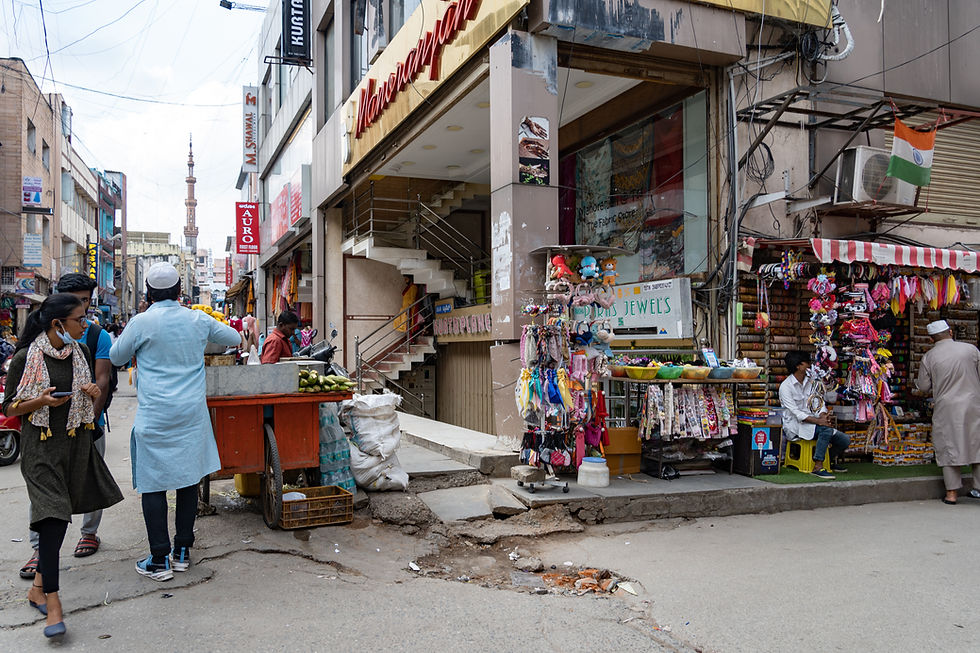
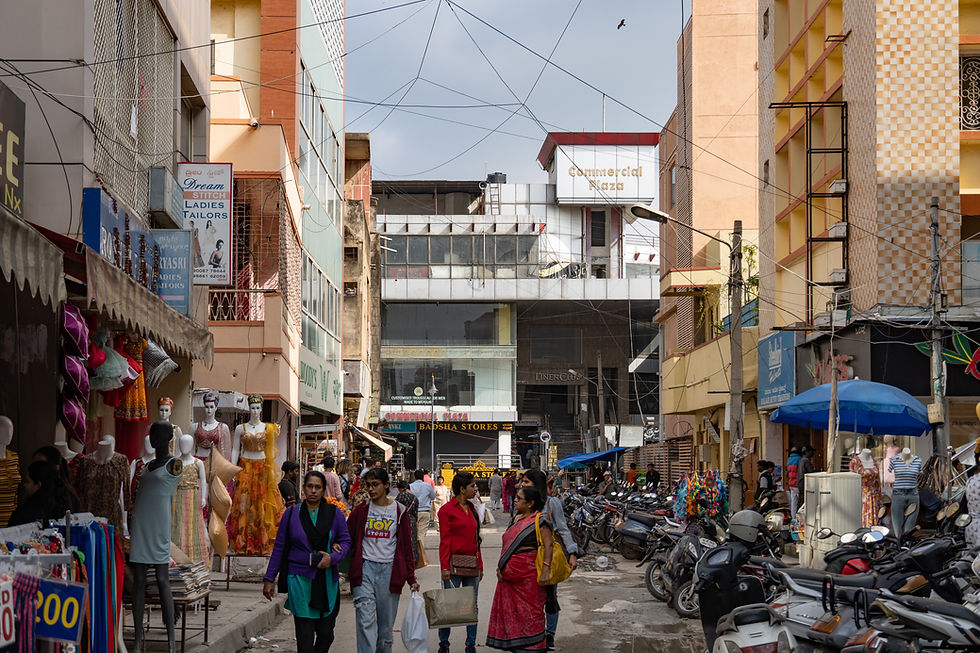
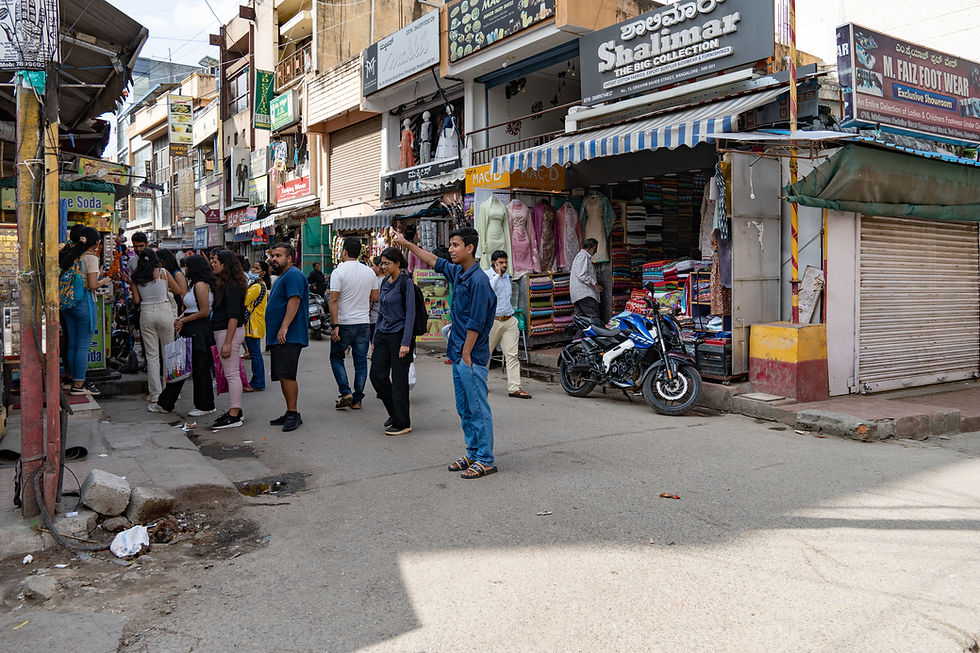
Our designated context was Commercial Street, a bustling shopping district featuring renowned branded stores. Amidst the hustle, hidden gems like Ibrahim Saheb and Veera Pillai reveal an eclectic mix of small businesses offering big brand rejects, arts, handicrafts, antiques, and locally crafted items. While newcomers may find it confusing, this vibrant area is truly a shoppers' paradise
Exploration
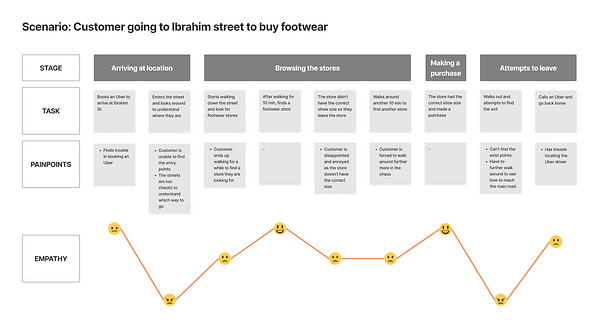
While navigating the commercial streets, we engaged in conversations with several customers throughout the day, encountering numerous challenges such as
-
Ambiguous entry/exit locations pose navigation challenges.
-
A significant portion of customers express a desire for exploration.
-
Discovery of smaller shops relies heavily on word-of-mouth recommendations.
-
Lack of distinctive landmarks made it difficult to shop/ explore and retrace steps
Problem Statements
-
Difficulty locating shops for revisits or based on recommendations from others.
-
Navigational issues on streets and difficulty in finding exits.
-
Uncertainty about where to search for a specific product.
How Might We
-
How might we preserve the cultural exploration experience within the market area without compromise?
-
How can we enhance exposure to the renowned cultural heritage and history of the market?
-
How can we effectively capture customers' attention to wayfinding tools?
-
How might we assist customers in comprehending their location on the street and facilitate easy navigation to entry and exit points?
-
In what ways could we enhance the discoverability and accessibility of shops for customers?
User Research
Our strategy involved exploring the location, comprehending the types of stores present, mapping out the area, and identifying the hotspots within the vicinity.
We formed teams of three, assigning one street to each group. We proceeded to survey the area, marking and documenting the types of stores and their respective locations. After a day of thorough exploration, we came together and collectively established categories such as clothing, festive wear, textile, hardware, electronics, etc.


Ideation
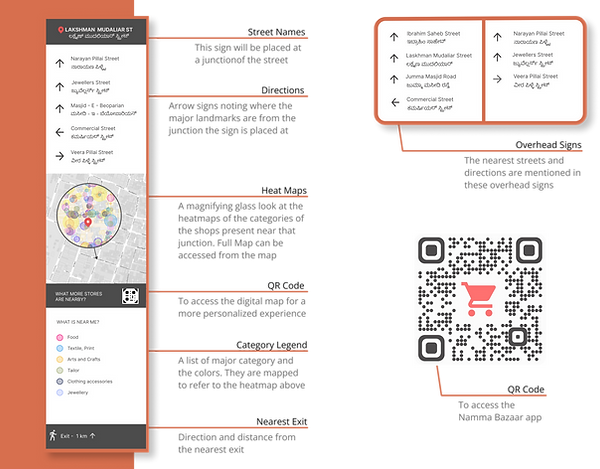
To address the How Might We's, our aim was to develop an app that delivers a personalized experience, incorporating features that encourage customers to shop and explore seamlessly. However, a significant portion of Commercial Street's customer demographic comprises elderly individuals who may not be as digitally savvy as the younger generation. Our objective was to create a product that enhances the navigation experience for older individuals, making it more efficient. As a solution, we focused on designing clear and legible signage and overhead signboards to assist older people in reading and locating themselves more effectively.
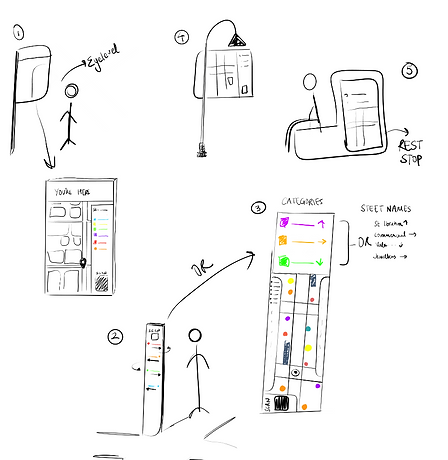
These initial iterations were developed for the signage and wayfinding aspects, emphasizing the challenge of presenting a substantial amount of information within limited space. Considering spatial constraints, a key priority was to avoid creating large signage while still effectively conveying crucial information

Some iterations that were finalized
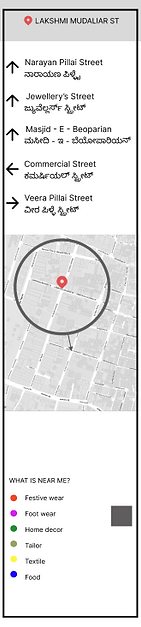
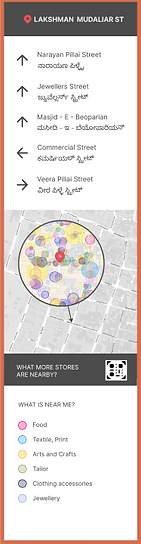
Directions for nearby streets
Location of current street
A visual depiction of your location along with an understanding of the types of stores in your vicinity
A QR code to access the Namma Bazaar app, ensuring a personalized user experience.
List of stores in your vicinity
.
After conversing with numerous customers, we were surprised to discover that many visit Commercial Street for exploration or family outings. Despite modernization, the area retains its historical charm as a quintessential Bangalorean marketplace. Our goal was to enhance efficiency for users while preserving the market's essence. Reflecting on the identified challenges in our How Might We statements, we designed wireframes to address the following issues:
-
Customers frequently forget shops they've visited in the maze-like area.
-
Shoppers often come with an open mind, preferring to discover trends before making purchases.
-
Established stores lack nearby landmarks, leading to extended search times.
-
Multiple entry and exit points cause confusion for customers once they finish shopping.
-
Many customers, including tourists, lack proper information about popular established stores or stalls, as even Google fails to provide comprehensive details.
For the app, we carefully considered features to assist shoppers in finding specific items while maintaining the significance of exploration within the marketplace.
These are few initial iteration for the home page
Key features:
-
User Location
-
Categories
-
Bookmarks
-
Places to Look Out For
-
My Account
-
Navigation Bar on Top - Highlighted path
-
Filter
-
Language
-
Settings
-
Entry / Exit Points


Initial iteration


Step 1:
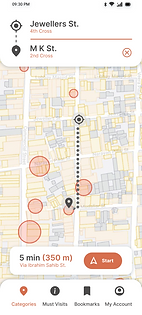
Select the category you want to explore, and you'll observe bubbles emerging around your location, pinpointing stores specializing in festive wear in your vicinity.

Step 2:
Choose any of the bubbles surrounding you. Upon clicking it, the app will display directions guiding you to the selected destination along with an estimated time of arrival.
Home page
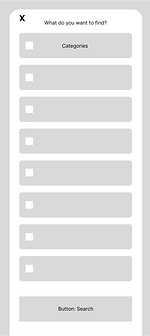

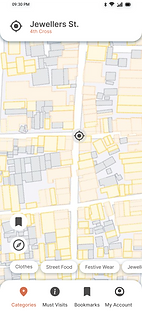
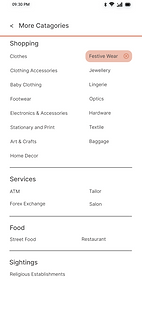
The question "What do you want to find?" serves as a prompt for users, indicating the availability of categories for store search. This aids customers with specific items in mind, allowing them to navigate and make purchases effortlessly. Additionally, it fosters exploration by not specifying a particular store but rather suggesting general categories, preserving the serendipitous aspect of discovery.
Categories page
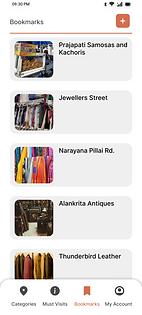
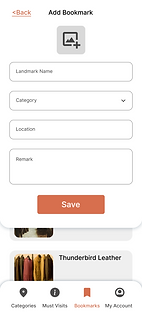
The "Bookmark" feature is designed to assist customers in saving their favorite stores. Users can assign a custom name to each bookmark, allowing them to easily recall specific stores. When customers wish to revisit a previous store, they can effortlessly navigate to the "Bookmarks" section, click on the saved store, and retrace their steps with convenience.
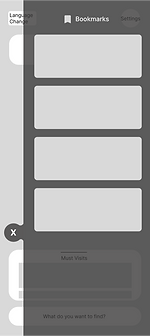

Bookmark feature
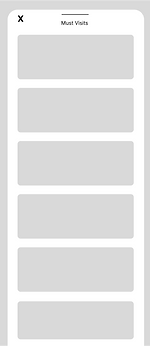
Must visit page
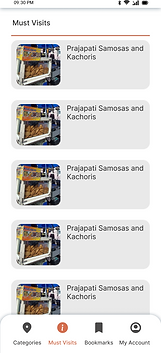
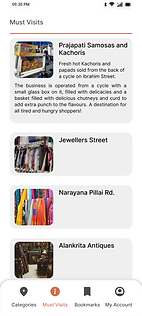
The "Must Visit" feature enables users to explore renowned locations within the market area, showcasing iconic textile shops, traditional craft sellers, prominent brand outlets, and more. This serves as a valuable guide for tourists and first-time visitors, directing them to the places that contribute to the fame of Commercial Street.
User Testing
For each of our focus areas of the app, we all conducted usability testing and continued iterating until reaching the product's final forms. The following were feedbacks that we got -
-
Users struggled to understand that the current location bar was not intended for search purposes.
-
Users preferred to shop based on ratings and reviews.
-
The barcode needs a visually stronger presentation on signages.
-
Heatmaps were overwhelming.


Final Product
Signages
Signages are crafted to improve the shopping experience for individuals less familiar with technology, aiding them in navigating the intricate streets. The overhead boards and signages at each junction provide valuable guidance regarding their location and the stores in proximity.
![OVERHEAD-IBRAHIM-NEW[1]](https://static.wixstatic.com/media/991fe1_a6b1e5e3fa854880845cd4177c863883~mv2.png/v1/fill/w_540,h_358,al_c,q_85,enc_avif,quality_auto/991fe1_a6b1e5e3fa854880845cd4177c863883~mv2.png)
Describe your image

Describe your image

Describe your image
Describe your image
Direct Onboarding!
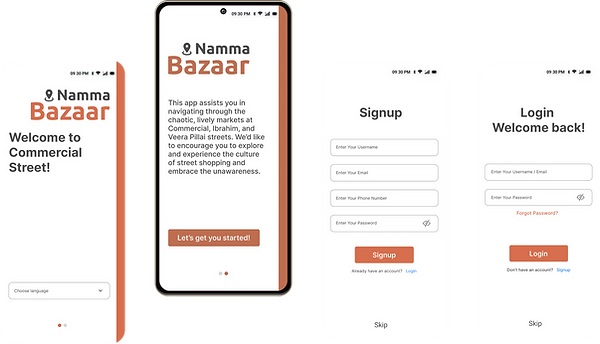
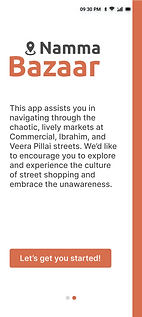
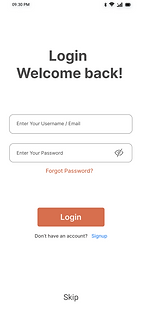
Upon scanning the QR code, users will encounter onboarding screens, prompting them to select their preferred language to address potential language barriers. The subsequent screen offers a warm welcome and provides an introduction to the app's purpose for new users. Following this, a sign-in pop-up appears, requesting name, phone number, and email information for daily updates. However, there is an option to skip this step for users who prefer immediate access without creating an account. Creating an account unlocks additional features for those who choose to do so.





My Learnings
It was quite enjoyable working on this project. Since there were many of us, we were able to progress at a much faster pace and reach stages like user testing on time within the given timeframe. This facilitated obtaining validation and genuine criticism directly from the users, which was both rewarding and humbling.
I felt we lacked sufficient information about who frequently visits Commercial Street. As a newcomer to the city, with the diverse demographic of people visiting, I recognized the need to ask more questions to delve into the heart of our problem space.
By incorporating questions during user interviews, focusing on how users currently perceive and experience the marketplace and what their goals are, we unearthed points that weren't immediately apparent. This key finding guided our entire problem-solving process. Since we aimed to create a holistic experience, understanding each user type and their challenges was integral.
As I take on more projects, I am realizing that expecting myself to know everything is an unrealistic expectation, and asking questions can only enhance the process. I'm glad we had enough time to refine our designs and produce outputs that resonated with and fulfilled the goals of the customers.